
Usually stays
Block and Concrete Walls
Mold grows on the surface and in the dust on masonry. It is vacuumed, scrubbed and treated. The wall stays. Waterproofing after cleaning keeps the moisture coming through it down.

Finished and unfinished basements
Musty smell, spots on the block walls or mold behind the drywall? We remove basement mold and put in what keeps it from coming back: sump pumps, sealing and dehumidifiers.
Basement mold
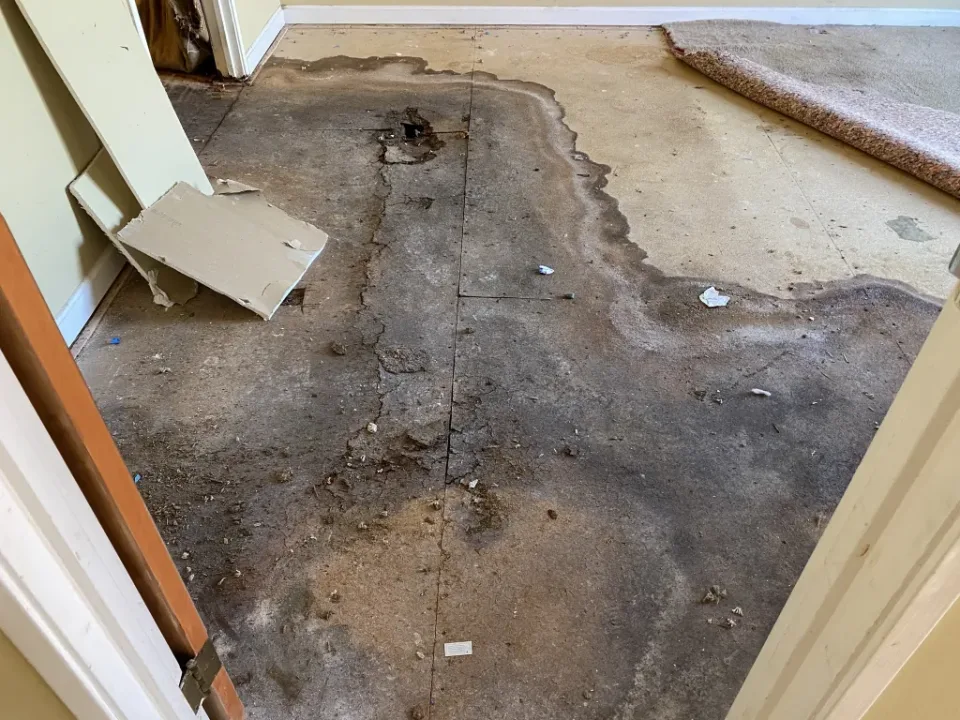
A basement sits in the ground, so it is surrounded by damp soil on every side. Mold there is almost always a water problem first: water coming in, or humid air turning to water on cool surfaces.
Not every white mark is mold. A dry, chalky white powder on block walls is usually mineral salt left by water passing through, and telling the two apart is part of how to spot a mold problem. It still means water is getting in. Our Memphis team has dried and cleaned basements since 1989.
Water from outside
Water from inside the house
Your basement
Finished basement
Drywall, carpet and framing hide mold and hold water. More comes out, so the job is bigger.
Unfinished basement
Bare block, concrete and open joists. Everything is in reach, so most of the work is cleaning.
Stays or goes
Usually stays
Mold grows on the surface and in the dust on masonry. It is vacuumed, scrubbed and treated. The wall stays. Waterproofing after cleaning keeps the moisture coming through it down.
Depends
Drywall with mold on it comes out, cut above the growth. Solid wood studs are usually cleaned and kept. Particleboard trim and soft, rotted wood are replaced by your contractor.
Usually goes
Carpet and pad on a damp slab trap moisture right where mold grows. Moldy carpet and pad are removed. Glued-down floors with mold under them come up so the slab can be cleaned.
How it goes
Small jobs fold some of these into one day. Bigger ones spread them out. The order stays the same.
Visit 1
Inspect and plan
Moisture meters and a thermal camera show where the mold is and where the water comes in. If there is standing water, our water removal crew gets it out first.
Visit 2
Contain and remove
The basement is sealed off from the stairs, HEPA air scrubbers start, and moldy drywall, insulation and carpet come out.
Visit 3
Clean, treat and dry
Walls, framing and slab are cleaned and treated with a mold inhibitor. Drying equipment and a dehumidifier run in the background.
Visit 4
Check and hand off
Moisture readings and a final look, then a report with photos. Waterproofing or a sump pump can go in now if you need them.
Prevention
Clean walls stay clean only if the water stops. We install the inside fixes ourselves.
Basement dehumidifier
Sized for the space and drained so you do not have to empty a bucket.
Sump pump
For basements where groundwater rises after heavy rain.
Crack sealing and wall sealer
Slows the water coming through block and concrete walls.
Interior drain
Catches water at the base of the wall and carries it to the sump.
Outside the house, by other trades
Most basement water starts outside. Fixing the yard side makes every inside fix work better.
Rebuilding
Yes, once it is dry and the water source is handled. Your contractor rebuilds. These four habits keep the new finish from going moldy.
Wait
Build back only after our readings say the walls and slab are dry.
Lift
Leave a small gap between new drywall and the slab so it cannot wick water up.
Choose
Ask your contractor about mold-resistant drywall and flooring made for below grade.
Run
Keep the dehumidifier on through the summer, even when the basement feels fine.
Cost
Two national cost guides give the same range. These are not our prices. Your free quote gives the real number.
$500
$3,000
Sources: This Old House (2026) and Bob Vila (2024). Waterproofing, a sump pump, a dehumidifier and rebuilding the finished space are priced separately.
Why choose us
Basement mold is a water problem first. A mold company can clean the walls, but if the water keeps coming, the mold comes back. We handle the water before, during and after.
Pumps and extractors clear standing water, and the walls and slab are dried before any mold work.
The basement is sealed off from the stairs, HEPA air scrubbers run, and every surface is cleaned and treated.
Sump pump, wall sealer, interior drain or a dehumidifier, installed by the same crew.
Service area
Our crews cover 29 ZIP codes across Memphis, from Downtown to Hickory Hill and the Bartlett side. Not sure if you are in our area? Give us a call and we will tell you right away.
FAQ
Have a question that is not listed here? Call us and talk to a real person on our Memphis team.
It can. Air from the basement rises up the stairs and through the ducts, and with it the musty smell and spores. That is why the basement is sealed off from the stairs while we work.
Look behind what you cannot see: under carpet, behind finished walls and boxes against the walls. A moisture reading usually tells us where to look first.
If water comes up through the floor or rises at the base of the walls after heavy rain, a sump pump usually helps. If water only comes through cracks or window wells, sealing and drainage outside may be enough.
Yes, with a few habits: plastic bins instead of cardboard, shelves off the floor and a gap between boxes and the walls, so air can move and you can see the walls.
An unfinished basement is often done in a few days. A finished basement takes longer, because drywall and flooring come out and the space has to dry before the final readings.
Sometimes, when the mold comes from a sudden covered event like a burst pipe. Mold from slow seepage, groundwater or humidity is usually not covered. Check your policy before work starts.
Related services
Call ServiceMaster by Riverside to have your basement checked. We will find the mold, find the water and tell you what it takes to fix both.
Call now: (901) 459-6610