
Available 24/7, on site in 2 to 4 hours
Sewage Cleanup Memphis, TN
Sewage coming up through a drain, toilet or tub? Our crew removes it, takes out what it ruined, then cleans, disinfects and dries your home or business.
- Serving Memphis since 1989
- IICRC certified technicians
- Homes and businesses
Category 3 water
What Our Crew Handles When Sewage Backs Up
Sewage is Category 3 water, the most contaminated kind. When it comes up through a drain, toilet or tub, it needs a crew that treats it as a health hazard, not just a wet floor.
We remove the sewage, take out what it ruined, clean and disinfect what stays and dry the building. We have been doing restoration work in Memphis since 1989, for homes, rental units and businesses.
One thing we do not do is fix the pipe. A licensed plumber clears the clog or repairs the line. We handle everything the sewage touched.
- On site in 2 to 4 hours, 24/7
- Full protective gear and containment
- Every surface cleaned and disinfected
- Homes, rentals and businesses
Before we arrive
Is It a Sewage Backup? First Steps Before We Arrive
Sewage looks like any other water on the floor at first. Here is how to tell, and what to do while our crew is on the way.
Signs the Water Came From the Sewer
- Dirty water rising out of a floor drain, tub or shower
- Toilets gurgling, bubbling or backing up on their own
- Several drains backing up at the same time
- A sewer smell in the basement, crawl space or lowest floor
- It started, or got worse, during heavy rain
Water near outlets or the breaker panel?
Do not walk in. Stay out and call MLGW or 911 to have the power shut off safely first.
What to Do Right Now
- 1
Stop using water everywhere
No flushing, showers, laundry or dishwasher. Every drop you send down the drain can come back up.
- 2
Keep people and pets out
Close the door to the area. Children, pets and anyone sick or pregnant should stay away.
- 3
Turn off the heating and AC
A running system can pull air from the wet area and spread the smell through the house.
- 4
Do not try to mop it up
Skip the bleach and the household vacuum. If you must step in, wear rubber boots and gloves and wash well after.
- 5
Take photos, then call us
Photos of the water and the drain it came from help with an insurance claim. Then call, day or night.
Your Pipe or the City's? Who Fixes the Line
The backup will keep coming until the line is fixed, and that part is not our job. Where the problem sits tells you who to call. We clean up after either one.
Call a plumber
Only your building backs up
The clog or break is most likely in your own sewer line. Call a licensed plumber to clear or repair it.
Report to Memphis 311
Neighbors have it too, or a manhole overflows
The problem may be in the city sewer main. Report it to Memphis 311 as a "Sewer Problem" request.
Common causes
Why Sewage Backs Up in Memphis Homes
Many Memphis houses sit on sewer lines that are decades old. The city has been working since 2012, under a federal and state agreement, to cut down sewer overflows. Inside your property line, these are the usual causes.
Heavy Rain
Storm water that leaks into sewer lines can fill them past capacity. The overflow comes out at the lowest drain.
Tree Roots
Roots grow into the joints of older clay and cast iron lines, catch waste and slowly close the pipe.
Grease From the Kitchen
Cooking grease goes down warm and hardens in the pipe. Homes and restaurants both deal with it.
Wipes and Paper Towels
Even "flushable" wipes do not break down like toilet paper. They snag and build a plug.
A Broken or Sagging Line
Old pipes crack, shift or sink in the soil. Waste collects in the low spot until it backs up.
A Failed Ejector Pump
Basement bathrooms often rely on a pump to lift waste. When it stops, the pit overflows.
Health and safety
Why Sewage Is a Health Hazard
Sewage carries bacteria, viruses and parasites from human waste. They can make people sick even when the water looks fairly clear.
How it gets to people
- Touching it, especially with a cut or scrape
- Hands that touched it, then touched food or your face
- Splashes and fine droplets when it is stirred up
Keep them away
- Babies and young children
- Older adults
- Anyone pregnant
- People with a weak immune system
Why Bleach and a Shop Vac Are Not Enough
It is the first thing most people reach for. For a sewage backup, it does more harm than good.
Bleach stays on the surface
It cannot reach the sewage soaked into drywall, wood, insulation and carpet pad.
A shop vac spreads it
It throws fine droplets into the air and leaves the vac itself contaminated.
Dry is not the same as clean
Porous materials can look and feel dry and still hold what the sewage left behind.
Our process
How Our Sewage Cleanup Works
Five stages, in this order. Skipping one is how sewage smell and mold come back weeks later.
- 1
Safety Check and Sewage Removal
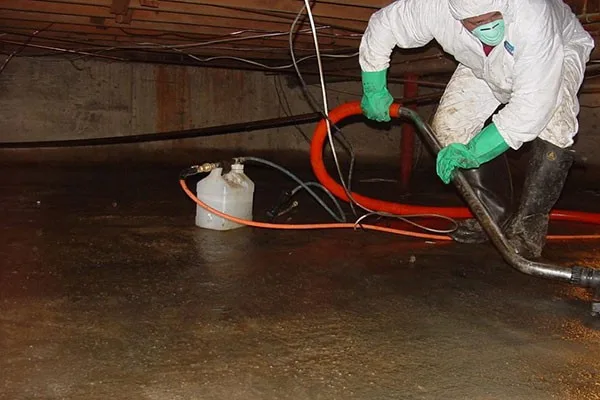
Our crew suits up in full protective gear and closes off the work area with plastic sheeting, so sewage is not tracked into clean rooms. Belongings are moved out of the wet area. Then submersible pumps and extractors take out the sewage and the solids.
- 2
Tearing Out What Cannot Be Saved
Porous materials the sewage soaked into come out: carpet and pad, the lower part of the drywall, wet insulation. They are bagged and carried out. This also opens the wall so it can be cleaned and dried inside.
- 3
Cleaning and Disinfecting Every Surface
Floors, studs, slab and anything hard that stays are scrubbed clean first, then disinfected. Cleaning comes first because a disinfectant cannot work through a layer of dirt.
- 4
Drying and Moisture Checks
Once the surfaces are disinfected, drying equipment goes in and stays on around the clock, set up to IICRC standards. Framing, slab and subfloor get checked with meters and a thermal camera until they read dry. This is the same structural drying we use after any water loss.
- 5
Ready for Your Repair Contractor
We do not rebuild. When we leave, the area is clean, disinfected and dry, so your contractor can put back the drywall, flooring and trim without sealing a problem inside the wall.
Who does what
Plumber, City or Cleanup Crew? Who Handles Each Part
A sewage backup usually takes more than one call. This is who does each part, so nothing falls through the cracks and you do not pay twice for the same thing.
You
- Stop using water and keep people out
- Call your insurer and get a claim number
Plumber
- Clear the clog in your sewer line
- Camera-inspect and repair your line
City (311)
- Fix a backed-up city sewer main
Our crew
- Pump out the sewage
- Tear out soaked carpet, drywall and insulation
- Clean and disinfect what stays
- Dry the structure and check moisture
- Bill your insurer for a covered loss
Repair contractor
- Put back drywall, flooring and trim
Not sure where to start? Call us at (901) 459-6610. We will tell you whether you need a plumber first.
Remove or clean
What Has to Go and What Can Be Cleaned
Sewage changes the rules. Things that could be dried and kept after a clean water leak often have to go when the water came from a sewer line. The question is simple: can it be cleaned all the way through?
Carpet and carpet pad
RemovedThe pad soaks up sewage like a sponge and cannot be disinfected.
Drywall
Removed above the wet lineSewage wicks up the paper and gypsum. The cut goes above the highest wet reading.
Wall and floor insulation
RemovedIt traps sewage and stays wet inside the wall.
Particleboard and MDF
RemovedCabinet bases, shelves and baseboards swell and hold contamination.
Mattresses, upholstered furniture, rugs
Usually thrown outStuffing and padding cannot be cleaned all the way through.
Paper, cardboard boxes, books
Usually thrown outThey absorb sewage fast and fall apart when wet.
Wood studs and framing
Cleaned and keptSolid wood is scrubbed, disinfected and dried in place.
Concrete, tile, metal, glass
Cleaned and keptHard surfaces do not soak it up, so cleaning and disinfecting works.
Hard plastic, dishes, metal tools
Often cleaned and keptItems that can be washed and disinfected usually stay.
Every job is checked on site. How long the sewage sat and how high it wicked can change the list.
Where it happens
Sewage in Crawl Spaces, Basements and Commercial Buildings
The steps stay the same. What changes is how we reach the sewage and how we keep the rest of the building in use.
Crawl Spaces
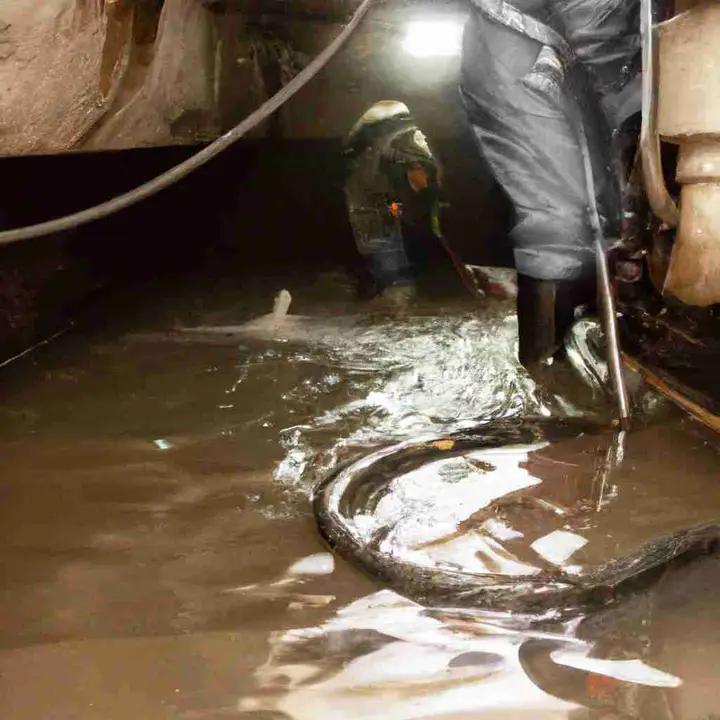
Many Memphis homes sit on a crawl space, and a broken line under the house can leak for weeks before anyone notices. The smell rising through the floor is often the first sign. We pump out the sewage, remove the soiled vapor barrier and insulation, then clean, disinfect and dry the space.
Basements and Floor Drains
The lowest drain in the building is where sewage shows up first, so basements take the hit. We clear the floor, pull out soaked finishes and dry the walls and slab.
Restaurants, Offices and Rental Units
A backup in a business means closed restrooms, a closed kitchen or an unhappy tenant. We close off the affected area so the rest of the building can keep running where it is safe. Landlords and tenants can both call us.
Cost
How Much Does Sewage Cleanup Cost in Memphis?
Typical sewage cleanup
$2,000 to $10,000
Category 3 water averages about $7.50 per square foot nationally.
These are typical ranges from published national cost guides, not our prices. The real cost depends on the job and is confirmed in your free quote.
Not part of the cleanup price:
- The plumber's bill to clear or repair the line
- Rebuilding drywall, flooring and trim
Six Things That Push the Number Up or Down
- 01Square feet the sewage reached
- 02Hours it sat before cleanup
- 03How high it wicked up the walls
- 04Carpet, drywall, subfloor or cabinets to remove
- 05Crawl space or basement access
- 06Days of drying
Calling early saves money. Sewage pulled out in the first hours has less time to wick, so less comes out of the walls.
Insurance
Does Insurance Cover a Sewer Backup?
Sometimes. It depends on your policy, not on how bad the mess is. Sewage that backs up through your own drains falls under your homeowners or business policy, usually only if it has backup coverage. Outside water rising into the building falls under flood insurance, and the cleanup is handled as flood damage restoration.
Once you have a claim number for a covered loss, we bill your insurance company directly and follow their mitigation guidelines.
Look for a backup add-on
It is often called "water backup" or "sewer backup" coverage. Many standard policies leave it out unless you added it.
Call your insurer early
Report the backup the same day and get a claim number. Keep your photos and any plumber invoice.
Renting?
The landlord's policy usually covers the building. Your renters policy may cover your belongings.
Service area
Sewage Cleanup Areas We Serve
Our crews cover 29 ZIP codes across Memphis, from Downtown to Hickory Hill and the Bartlett side. Not sure if you are in our area? Give us a call and we will tell you right away.
- Hickory Hill
- Bartlett
- Whitehaven
- Raleigh
- East Memphis
- Southeast Memphis
- University District
- Frayser
- Midtown
- North Memphis
- South Memphis
- Downtown
FAQ
Sewage Cleanup FAQs
Have a question that is not listed here? Call us and talk to a real person on our Memphis team.
How long does sewage cleanup take?
Removal, tear-out and disinfecting usually happen in the first one or two days. Drying takes 3 to 5 days on average, and sewage jobs can run longer because more material comes out and more surfaces need cleaning.
Can we stay in the house during sewage cleanup?
Often, yes, if the backup stayed in one area and you still have a working bathroom. The work area is closed off. If the only bathroom is affected, or someone in the home is at higher risk, staying elsewhere for a few days is safer.
Is an overflowing toilet a sewage job?
If the bowl had waste in it, yes. That water counts as Category 3 and gets the same cleanup as a sewer backup. Clean water from the tank or supply line is a simpler job.
Will the sewage smell go away?
Yes, once the source is gone. The smell lives in soaked materials and on dirty surfaces. When those are removed, cleaned, disinfected and dried, the odor goes with them. Air fresheners only cover it.
Can a sewage backup lead to mold?
Yes. Sewage brings a lot of moisture and organic material, and mold can start growing within a few days if the area is not dried. That is why drying and moisture checks are part of every sewage job.
How do I keep a sewage backup from happening again?
Ask your plumber to camera-inspect the line for roots or breaks. Keep grease, wipes and paper towels out of the drains. A backwater valve on the main line can stop city sewage from flowing back in during heavy rain.
Related services
Next Steps After a Backup
Get Sewage Out of Your Home or Business Today
Call ServiceMaster by Riverside any time, day or night. Tell us where the sewage came up, and we will send a crew in full protective gear.
Call now: (901) 459-6610