

Available 24/7, on site in 2 to 4 hours
Structural Drying Memphis, TN
The water is gone, but the walls, subfloor and framing are still wet. We dry the building itself, room by room and under the house, until the readings say it is done.
- Serving Memphis since 1989
- IICRC certified technicians
- Floors, walls and crawl spaces
Structural drying
Dry Floors Can Still Hide a Wet Structure
Water does not stay on top of the floor. It runs under baseboards, into wall cavities and down into the subfloor. The surface can dry in a day while the wood underneath stays wet for weeks.
Structural drying is drying the building itself: framing, subfloor, walls and slab. Our Memphis restoration crews do it with air movers and dehumidifiers, and check it with moisture meters and thermal cameras. The equipment stays until the readings prove the building is dry, the same finish line as every water mitigation job.
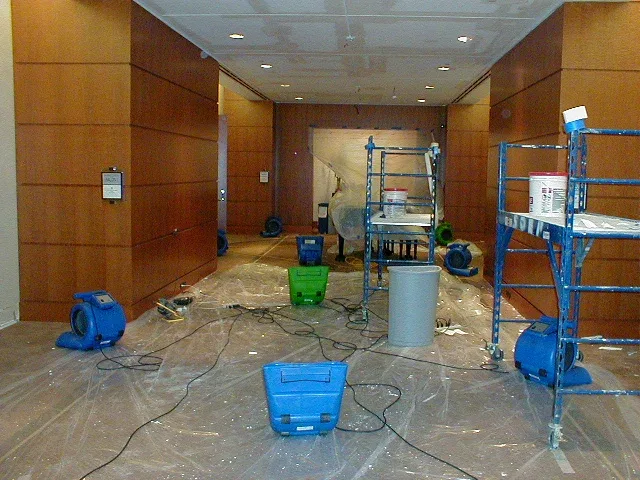
What you see
- Floor feels dry to the touch
- Carpet looks normal again
- Paint looks fine
- The room smells like nothing yet
What is often still there
- Water in the bottom plate and studs
- A wet subfloor under the finished floor
- Damp insulation inside the wall
- Moisture under cabinets and tubs
Warning signs
Signs Your Home Is Still Wet Inside
"The water is gone" and "the house is dry" are not the same thing. Watch for these in the weeks after a leak.
- The air
A musty smell that shows up later
Days after the leak, the room starts to smell damp, often worse when the AC kicks on.
- Floors
Floor boards that cup or crown
Edges that rise (cupping) mean the boards are taking on water from below. A raised middle (crowning) can follow when the top dries before the bottom.
- Walls
Soft, stained or bubbling drywall
Press low on the wall. If it gives, or paint is bubbling, the wall is still holding water.
- Trim and cabinets
Swollen baseboards or cabinet bases
Particleboard and MDF swell when wet and do not shrink back.
- Under the house
Damp air in the crawl space
Wet insulation, condensation on pipes or a sour smell under the house.
- The drying job
Equipment left before any readings
If nobody checked the framing with a meter, nobody knows if it is dry.
Material by material
How Fast Each Part of Your House Dries
The slowest material sets the finish date. Here is the order, from the parts that dry first to the ones that hold water longest. When something cannot be dried, we follow our save or replace rules.
Drywall and Wood Framing
Faster- Drywall
- Gives up water quickly once air reaches both sides. Small holes low on the wall let dry air into the cavity.
- Wood studs and plates
- Dried in place with air movers aimed at the wall and a dehumidifier pulling the water out of the air.
Subfloor and Hardwood Floors
Slower- Plywood and OSB subfloor
- Dense layers that dry from the top and the bottom. In a crawl space home, we dry it from below too.
- Hardwood flooring
- Floor drying mats sit on the boards and pull water up and out, so the floor can often stay in place.
- Under cabinets and tubs
- Small holes in the toe kick or base let air reach the space underneath.
Concrete Slabs, Brick and Plaster
Slowest- Concrete slab
- Holds water deep inside and can read wet long after the top looks dry.
- Brick and block
- Soaks up water like a sponge and dries from the surface inward.
- Plaster walls
- Found in many older Memphis homes. Thick and dense, so it dries far slower than drywall.
Local conditions
Memphis Humidity and Your Drying Job
A Memphis summer is hot and sticky. That outside air is already full of moisture, which changes how a wet house should be dried.
June to September
Summer: Keep It Closed
We keep doors and windows shut and let the dehumidifiers do the work. Humid outside air stays out, and the water in the walls has somewhere to go.
December to February
Winter: Keep the Heat On
Cold air slows drying. A warm house helps wood and drywall give up water. For cold or very large spaces, we bring desiccant dehumidifiers.
Why Open Windows Can Slow Drying in Summer
Fresh air feels like it should help. On a humid day, it carries more water into the house than it takes out. The dehumidifiers then have to remove the moisture from your walls and the moisture from outside.
Why Your AC Cannot Do the Drying Alone
A home AC pulls some moisture out of the air, but it is built to keep you cool, not to dry soaked wood. It shuts off once the room is cool, while the walls keep giving off water. A drying dehumidifier keeps working until the air is dry.
Under the house
Drying Under the House: Crawl Space Drying
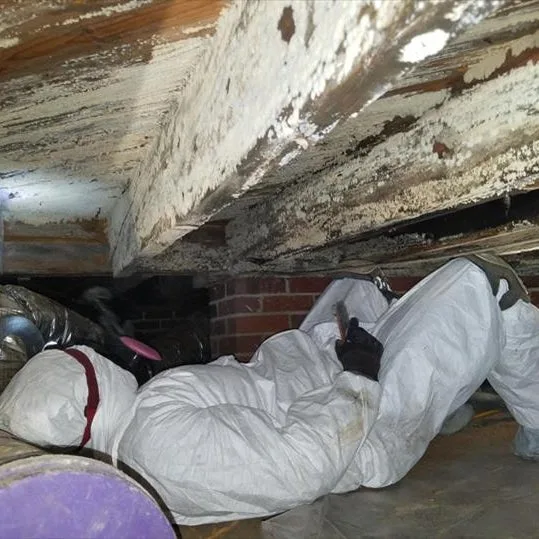
A lot of Memphis houses are built up off the ground, with a crawl space below. When water gets down there, the joists and the underside of the subfloor stay wet, and that moisture rises into the floors and the rooms above.
Drying only the rooms leaves the problem in place. We dry the space under the house as its own job.
Step 1
Water out
Pumps and wet vacs clear standing water off the soil.
Step 2
Wet material out
Soaked insulation and torn vapor barrier come out.
Step 3
Air and dehumidifier in
Equipment goes under the house and runs on joists and subfloor.
Step 4
Readings from below
We meter the joists and subfloor until they match the dry goal.
Before repairs start
Why Your Repair Contractor Should Wait for a Dry Reading
We dry the building. Rebuilding is done by your own contractor. The timing between the two decides whether the repair lasts.
Closed up too early
- New drywall goes over wet studs and traps the water inside the wall
- Paint peels and joint tape bubbles within weeks
- Flooring glue fails and new boards cup
- Mold starts growing where nobody can see it
After the dry reading
- Framing and subfloor read at the dry goal
- New materials go onto dry wood and concrete
- Finishes hold and floors stay flat
- No moisture left behind for mold
When the last readings hit the dry goal, we pull the equipment and let you know the building is ready for repairs.
Cost
Structural Drying Cost: Typical Ranges and What Adds Days
Drying cost depends mostly on how much equipment is needed and how many days it runs. The real number is confirmed in your free quote.
Drying out a 500 sq ft basement
Often in this range, before any repairs (Fixr, 2025).
National estimates from published cost guides, not our prices. Every job depends on the building and the water.
What Adds Drying Days
What Sets the Size of the Job
Service area
Structural Drying Areas We Serve
Our crews cover 29 ZIP codes across Memphis, from Downtown to Hickory Hill and the Bartlett side. Not sure if you are in our area? Give us a call and we will tell you right away.
- Hickory Hill
- Bartlett
- Whitehaven
- Raleigh
- East Memphis
- Southeast Memphis
- University District
- Frayser
- Midtown
- North Memphis
- South Memphis
- Downtown
FAQ
Structural Drying FAQs
Have a question that is not listed here? Call us and talk to a real person on our Memphis team.
Can you dry hardwood floors without pulling them up?
Often, yes, if drying starts early. Floor drying mats sit on the boards and pull water up out of the wood. Boards that are badly cupped, or that soaked up dirty water, may still need to come out.
Will you need to cut holes in my walls?
Sometimes, and only small ones. A few holes low on the wall or in a cabinet base let dry air into the space behind it, so we do not have to remove the whole wall. Your repair contractor patches them afterward.
How loud is the drying equipment?
Loud enough that you will notice it, like several box fans running at once. Most people close the door to the drying area and sleep in another room while it runs.
Can I rent a dehumidifier and do it myself?
For a small spill on a hard floor, maybe. For water that reached walls, subfloor or a crawl space, rental units and fans are usually not enough, and without a moisture meter you cannot tell when the framing is dry.
Does insurance pay for structural drying?
When the water damage itself is covered, drying is usually part of the claim, since it keeps the damage from getting worse. Check your policy, and get a claim number before work starts if you can.
Do you dry commercial buildings?
Yes. We dry offices, stores and other commercial spaces as well as homes. For large or cold spaces we can bring desiccant dehumidifiers.
Related services
More Water and Mold Services
Find Out If Your Building Is Really Dry
Call ServiceMaster by Riverside any time. We will check the walls, floors and crawl space with meters and a thermal camera and tell you what is still wet.
Call now: (901) 459-6610