
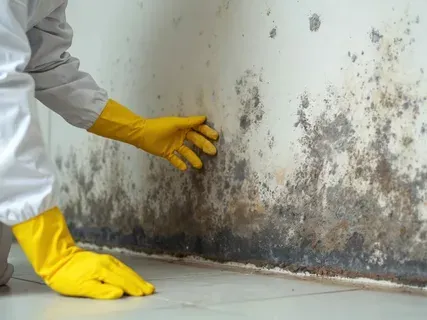
The clearest signs of a mold problem are visible growth, a musty smell that keeps coming back, and moisture that never fully goes away: water stains, condensation, damp spots or an old leak that was never dried. One sign is a warning. Several together usually mean mold is growing somewhere, even if you cannot see it yet. Mold needs water, so the real question behind every sign is where the moisture comes from. This guide covers what to look for in homes and commercial buildings, how to tell likely mold from a harmless stain, and when to call for help.
The Most Common Warning Signs
Visible Growth
Mold can look like black, green, gray, white or brown spots, fuzzy or slimy patches, or a stain that keeps spreading. On walls and ceilings it often starts in corners, behind furniture and around windows. In bathrooms it shows up in grout, in caulk and on the ceiling above the shower.
Not every dark spot is mold. Soot from candles, dirt marks and old water stains can look similar. The spots to take seriously are the ones that grow, come back after cleaning, or sit on a surface that stays damp.
A Musty Smell That Keeps Coming Back
A damp, earthy smell is often the first clue, because mold grows best where people rarely look: inside walls, under floors and in crawl spaces. Notice where the smell is strongest and when it shows up. A smell that gets worse after rain, when the air conditioning starts, or in a room that stays closed points to moisture close by. The EPA lists a building that smells moldy, with no visible source, as a main reason to suspect hidden mold.
Water Stains and Damaged Materials
Yellow or brown rings on a ceiling, paint that bubbles or peels, wallpaper lifting at the seams, swollen baseboards, and floors that cup, buckle or feel soft all show that water has been where it should not be. They do not prove mold is there. But building materials that stay wet for more than a day or two are exactly where mold gets started. The EPA and CDC both advise drying water-damaged areas within 24 to 48 hours to prevent it.
Condensation and Sticky Indoor Air
Water beading on windows, sweating cold-water pipes, damp closets and a sticky feel indoors all mean the air is holding too much moisture. The EPA recommends keeping indoor relative humidity below 60 percent, and ideally between 30 and 50 percent. A small hygrometer from a hardware store shows where your home or office stands.
Health Complaints That Ease When You Leave
According to the CDC, damp and moldy spaces can cause a stuffy nose, sore throat, coughing or wheezing, burning eyes or a skin rash in some people, and no symptoms at all in others. People with asthma or mold allergies may react more strongly. People with weakened immune systems or chronic lung disease can be at risk of lung infections.
These symptoms have many possible causes, so they are not proof of mold. If they ease when you spend time away from the building, tell your doctor, and look for a moisture problem in the building.
Visible Mold vs. Hidden Mold
Visible mold is the simpler case: you know it is there and roughly how large the area is. Hidden mold is harder, because the damage is usually bigger than what shows on the surface. According to the EPA's guide for commercial buildings, common hiding places include:
- The back side of drywall, wallpaper and paneling
- The top of ceiling tiles, often below a roof leak
- The underside of carpet and carpet pad
- Walls behind furniture, where condensation forms
- Condensate drain pans inside air handling units
- Pipe chases and utility spaces with leaking or sweating pipes
Suspect hidden mold when you have a musty smell with no visible source, a leak or flood that was never fully dried, or stains that keep coming back after you paint over them.
Do not cut into walls, pull up carpet or peel wallpaper to look. The EPA warns that removing wallpaper with mold behind it can release a large burst of spores into the room. Opening up hidden areas calls for protective gear and a way to contain the dust, which is why the EPA suggests an experienced professional for hidden mold.
Where Mold Usually Starts
Bathrooms, Kitchens and Laundry Rooms
Steam, splashes and slow plumbing leaks make these rooms the most common starting points. Check the cabinet floor under every sink, the base of the toilet, the caulk around tubs and showers, and the wall behind the washing machine. A soft spot or a dark ring on the cabinet floor usually means a drip has been going for a while.
Basements, Crawl Spaces and Attics
Basements and crawl spaces collect ground moisture, foundation seepage and plumbing leaks, and nobody spends much time in them. Attics get roof leaks and poor ventilation. In homes with the HVAC unit in the attic, a clogged condensate line can overflow and soak the ceiling below without anyone noticing until a stain appears.
HVAC Systems
Clogged condensate lines, wet drain pans and sweating ducts can all feed mold. Warning signs include a musty smell when the system starts, dark spots around supply vents, and water around the air handler. The EPA advises against running an HVAC system that you know or suspect is contaminated, because it can spread spores to the rest of the building.
Windows, Doors and Exterior Walls
Failed window seals, missing caulk and poor flashing let rain into wall cavities. Condensation on cold glass runs down and soaks sills and drywall. Peeling paint below a window or a stain at the corner of a door frame is worth a closer look.
Signs of a Mold Problem in Commercial Buildings
Offices, stores, warehouses and apartment buildings show the same signs as homes. They are just easier to miss, because no one person sees the whole building and leaks hide above drop ceilings and inside mechanical rooms. Watch for:
- Stained, sagging or crumbling ceiling tiles
- A musty smell in one suite, restroom, stairwell or storage room
- Repeated complaints from people who work in the same area
- Water around rooftop units, air handlers or drain pans
- Damp carpet near exterior walls, entrances or windows
- Boxes, paper records or drywall in storage rooms that feel damp
Ceiling tiles deserve extra attention. The EPA notes that heavy mold growth on ceiling tiles can affect the HVAC system when the space above the ceiling is used as a return air plenum, which is common in commercial buildings.
For property managers, a simple log of every leak, when it was fixed and how the area was dried makes repeat problems easy to spot. It also helps if a tenant or insurer asks questions later.
Possible Mold or Confirmed Mold?
Some signs confirm mold. Others only show conditions where mold could grow. Treat them differently.
| What you notice | What it usually means | Sensible next step |
|---|---|---|
| Fuzzy, slimy or spreading growth | Mold is present | Fix the moisture source, then plan cleanup by size |
| Musty smell, nothing visible | Possible hidden mold | Look for a moisture source; consider a professional assessment |
| Dry water stain that is not changing | Past moisture; mold possible, not confirmed | Confirm the leak is fixed; check for softness or odor |
| Condensation or high humidity | Conditions that favor mold | Lower the humidity and improve ventilation |
| Symptoms only inside the building | Not proof of mold | See a doctor and check the building for moisture |
What about testing? The CDC does not recommend routine mold testing, and the EPA says sampling is usually unnecessary when mold is visible. No EPA or other federal limits exist for mold or mold spores, so a lab number cannot tell you whether a space is "safe". Finding and fixing the moisture matters far more than naming the type of mold.
What You Can Safely Handle Yourself
The EPA says you can usually clean a moldy area smaller than about 10 square feet yourself, roughly a 3 foot by 3 foot patch, once the moisture problem is fixed. For a small job like that:
- Wear gloves, eye protection and an N-95 respirator.
- Scrub hard surfaces with detergent and water, then dry them completely.
- Throw away moldy porous items such as ceiling tiles or carpet that cannot be cleaned.
- Never mix bleach with ammonia or other cleaners, which can create toxic fumes.
- Do not paint or caulk over mold. It will grow through.
If anyone in the building has asthma, allergies or a weakened immune system, it is safer to let someone else do the cleanup.
When to Call a Professional
Call for a professional assessment when:
- The growth covers more than about 10 square feet.
- You suspect mold inside walls, under floors or in the HVAC system.
- The mold followed a flood, a sewage backup, or water that sat for days.
- Mold keeps coming back after cleaning, which means the moisture source is still there.
- The building is a rental, a workplace, or a place where sensitive people live.
A good assessment starts with the moisture, not just the mold. That means finding the leak or humidity source, using moisture meters to see how far the water spread, and planning cleanup and drying so the problem does not return. If a leak caused it, cleaning up the water damage properly is part of the fix.
How to Keep Mold From Coming Back
- Fix roof, plumbing and window leaks as soon as you find them.
- Dry anything wet within 24 to 48 hours. When water has soaked into walls, subfloors or insulation, household fans often cannot reach it.
- Keep indoor humidity below 60 percent. Run the air conditioning and bathroom and kitchen exhaust fans, and use a dehumidifier in damp basements.
- Keep condensate lines and drain pans clear, and change HVAC filters on schedule.
- Clean gutters and make sure soil slopes away from the foundation.
- In commercial buildings, schedule regular roof and mechanical checks, and give tenants and staff an easy way to report leaks.
Climate matters here. Memphis summers are long and humid, and relative humidity at Memphis International Airport averaged 67 percent across 2023, according to MemphisWeather.net. With outdoor air that damp, controlling indoor humidity is a year-round job, especially in basements, crawl spaces and rooms that stay closed.
Mold Help in Memphis
If you have a musty smell you cannot trace, mold that keeps coming back, or a leak that was never fully dried, ServiceMaster by Riverside can help. We work in homes and commercial buildings across Memphis, track down the moisture behind the mold, and handle mold remediation from start to finish. Call (901) 459-6610 or request a free quote.
Frequently Asked Questions
Can you have mold without seeing it?
Yes. Mold often grows on the back of drywall, under carpet, above ceiling tiles and inside HVAC equipment. A musty smell with no visible source, or a past leak that was never dried, are the usual clues.
Does a musty smell always mean mold?
No. Damp materials can smell musty before mold grows, and a dry drain trap can let sewer gas into a room. But a musty smell that lingers, or gets worse after rain or when the air conditioning runs, is worth investigating.
Is white fuzz on a basement wall mold?
Not always. White, powdery or crystal-like deposits on concrete or brick are often efflorescence, which is mineral salt left behind as water moves through masonry. It crumbles to powder and is not mold, though it does show that moisture is getting through the wall. Fuzzy white growth on wood, drywall or stored items is more likely mold.
Should I buy a mold test kit?
Usually not. The CDC does not recommend routine mold testing, and if you can see mold, the EPA says sampling is generally unnecessary. Money is better spent finding and fixing the moisture problem.